Education
Knee pain on stairs or when bending: causes and what to do next
Why stairs, squatting, or getting up from a chair can trigger knee pain, how to adjust activity, and what to ask about treatment including stem cell therapy.
Educational content, not individual medical advice.
At a glance
Stairs and bending ask the knee and its muscles to manage load in a different way from level walking. Pain during these movements can have several causes. Assessment, sensible activity adjustments, and tailored rehabilitation usually come before decisions about injections or other procedures.
Why stairs can feel different from walking
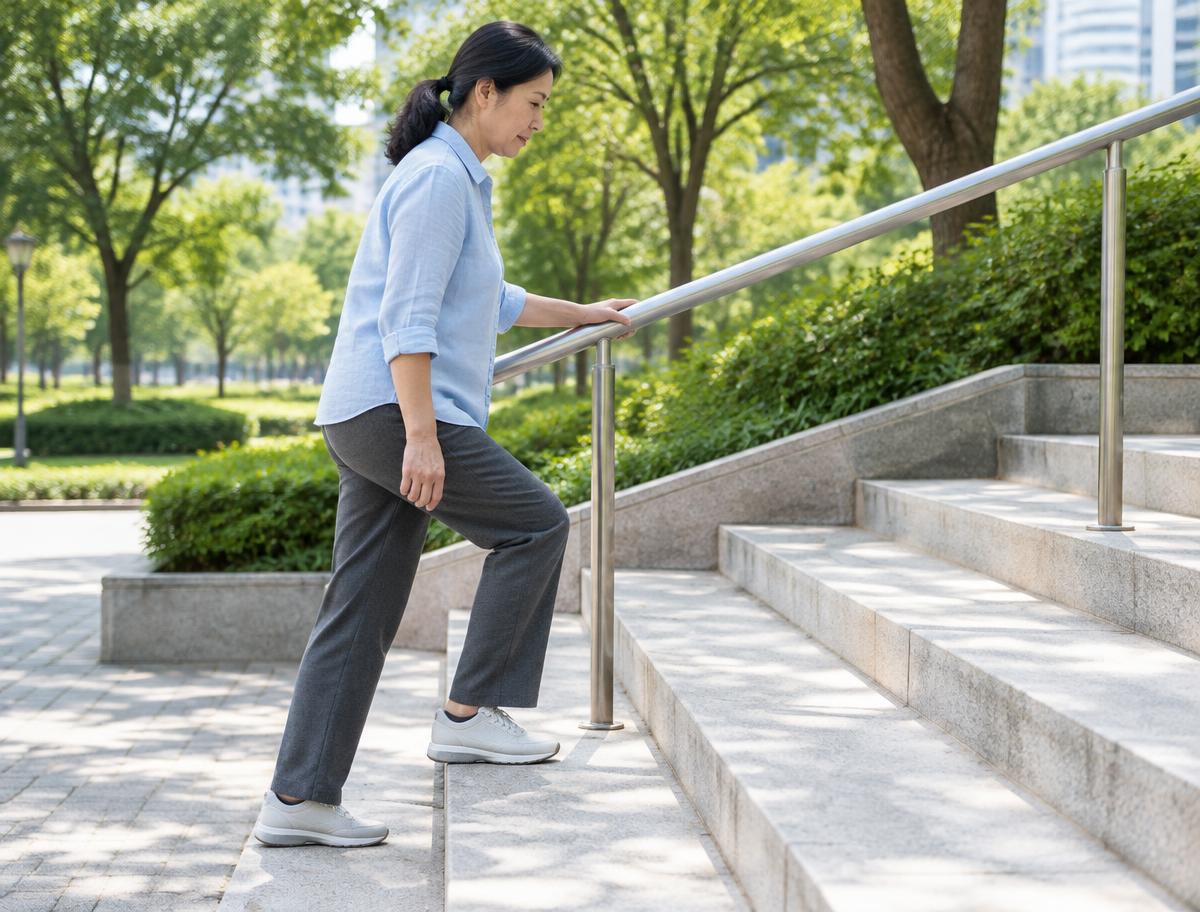
Climbing stairs requires your thigh muscles to lift your body, while going down asks them to control the lowering movement. The knee bends under load in both directions, and the kneecap moves against the thigh bone. This can make stairs uncomfortable even when level walking feels manageable. The difference does not identify a particular diagnosis on its own.
Deep bending, squatting, and rising from a low chair also change the demands on the joint and surrounding muscles. Symptoms may appear when these demands exceed current tolerance, particularly after a change in activity or a period of reduced movement. Pain during a movement does not automatically mean that movement has caused new damage, but persistent or severe symptoms still need assessment.
Pain around the kneecap is one possibility
Patellofemoral pain often involves the front of the knee or the area around the kneecap. It may be noticeable during stairs, squatting, running, or after sitting with the knee bent. Changes in activity, muscle function, and how load is managed can contribute. It is not simply a matter of a kneecap being in the wrong place or one muscle being weak.
A medical assessment considers the pattern and checks for other causes. Tenderness below the kneecap may instead involve the patellar tendon, particularly after repeated jumping or a sudden increase in training. Similar symptoms can require different rehabilitation choices. Avoid choosing exercises or an injection solely because an online description sounds like your pain.
Osteoarthritis, meniscal problems, and referred pain
Osteoarthritis can make loaded bending and stairs uncomfortable, especially when stiffness or reduced strength is also present. Meniscal problems may cause pain along the joint line, sometimes after a twist, although age-related meniscal changes can be present without causing symptoms. A scan finding should be matched to the history and examination rather than assumed to explain everything.
The hip or back can also contribute to symptoms felt near the knee. Swelling, true locking, or repeated giving way changes what needs checking. Clicking without pain is common and does not by itself prove damage. Tell the medical team exactly what happens: a brief noise, a painful catch, and a knee that cannot straighten are different experiences.
Adjust activity without assuming you must stop moving
If symptoms are mild and there has been no significant injury, temporarily reducing the most provocative activities may make a care plan easier to follow. This might mean fewer repeated stair trips, a shallower bend during tasks, or shorter walks. A handrail can provide support on stairs. Avoid carrying heavy objects there if pain or instability makes balance uncertain.
These are temporary practical adjustments, not a rule that stairs or bending are permanently unsafe. Aim to stay active within a tolerable range and discuss how to rebuild activity. Do not force a movement that causes sharp pain or instability. New swelling, a sustained worsening, or difficulty bearing weight means the plan needs reassessment rather than simply more effort.
What physiotherapy may focus on
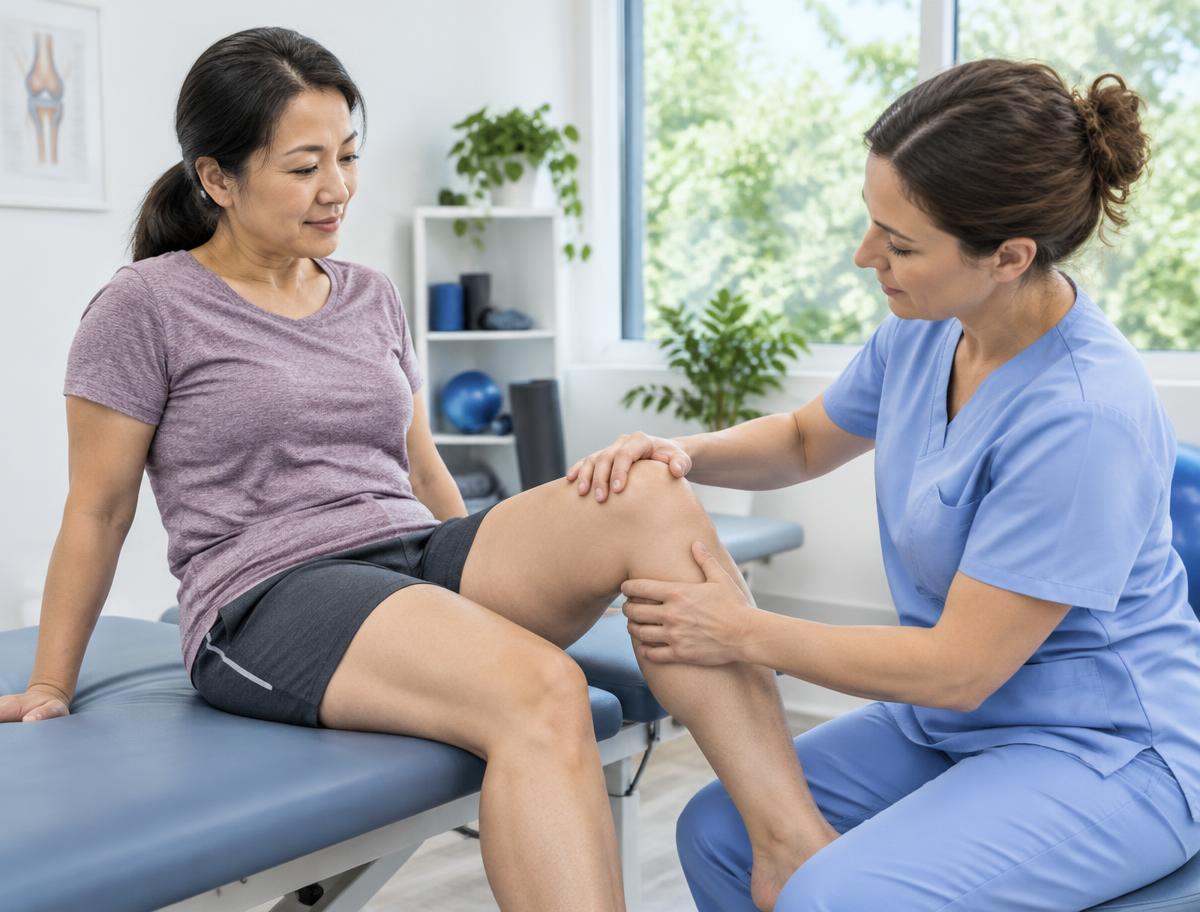
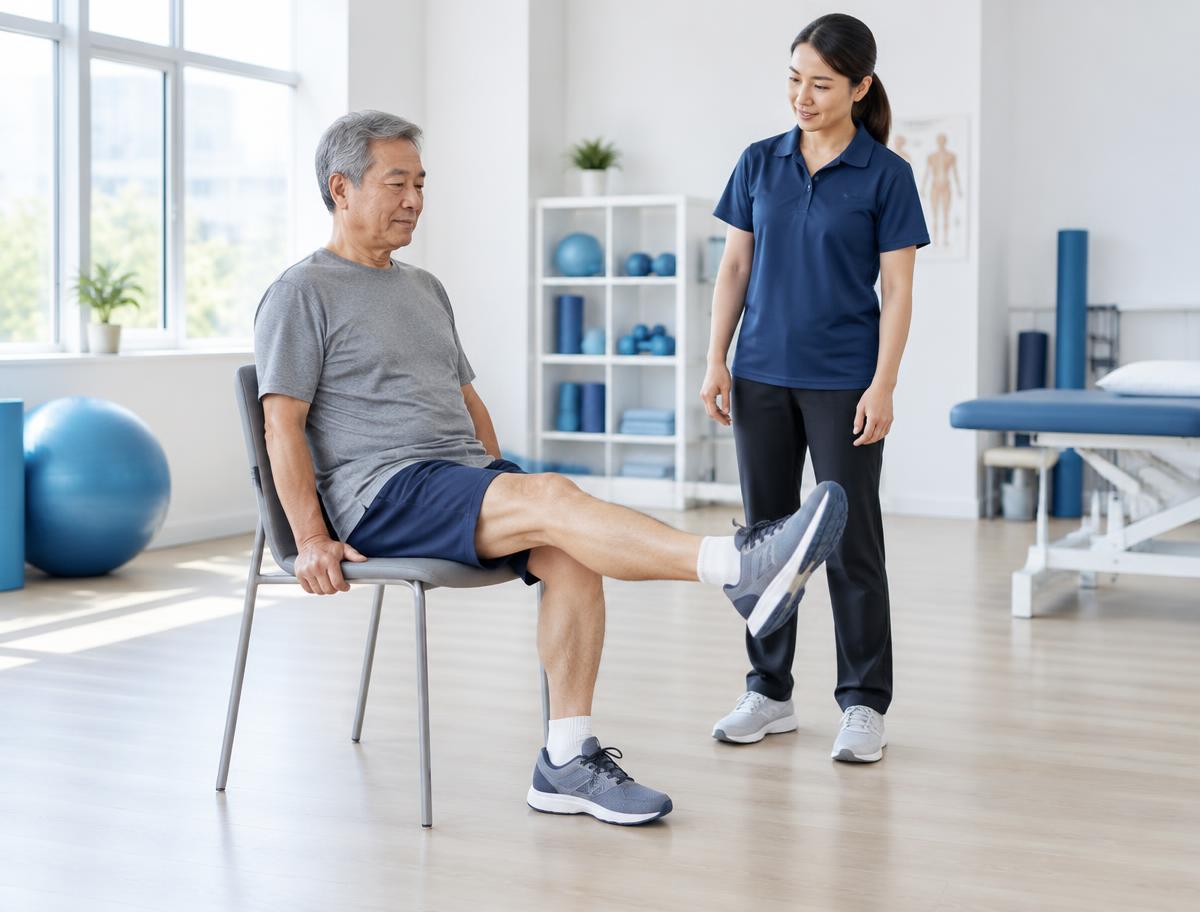
A physiotherapist may assess strength, movement control, flexibility, and the demands of your daily activities. For patellofemoral pain, rehabilitation commonly includes knee and hip strengthening with adjustments to aggravating activity. For osteoarthritis, tailored strengthening and general aerobic exercise are core guidance recommendations. The details differ because a painful tendon, an arthritic joint, and a recent injury are not interchangeable problems.
An exercise plan should explain where to start, how to progress, and which symptoms mean you should pause or seek advice. There is no universal set of repetitions or one exercise that suits every painful knee. If you have balance problems, other joint pain, or a heart or lung condition, mention it so the programme can be adapted rather than copied from a generic routine.
Assessment and symptom relief should fit the cause
Record whether going up or down is harder, where the pain sits, and whether the knee swells or feels unstable. Note any injury, changes in exercise, and how long symptoms have lasted. An examination may be more useful than requesting an MRI immediately. Imaging is considered when it is likely to answer a specific question or change management.
A pharmacist or medical team can advise on suitable symptom relief, taking account of other medicines and health conditions. Anti-inflammatory medicines are not suitable for everyone and should not be treated as a way to ignore worsening symptoms. If everyday function remains limited despite an appropriate plan, further assessment can explore other options rather than repeatedly trying the same exercises without review.
Does pain on stairs mean stem cell therapy is suitable?
No. Pain on stairs describes an activity trigger, not a condition that establishes suitability for stem cell therapy. Cell-based interventions are being studied particularly for knee osteoarthritis, but research on one diagnosis cannot automatically be applied to patellofemoral pain, tendon pain, or an undiagnosed injury. A consultation should establish the problem and explain standard care before considering a cell intervention.
Ask which cells and method would be used, what product-specific evidence exists, which risks and uncertainties remain, and what alternatives are recommended. Do not accept promises of cartilage regrowth or a guaranteed return to pain-free stairs. Our stem cell therapy overview explains the clinic's cell source and batch documentation; those quality checks do not establish that the treatment will help your particular symptom.
When to get help and prepare for a conversation
Seek urgent assessment if the knee is very painful, badly swollen, visibly changed after injury, or you cannot move it or put weight on it. A hot red knee with fever or feeling unwell also needs urgent care. True locking or repeated giving way deserves prompt assessment. Do not use a routine contact form as a substitute for urgent medical help.
For persistent activity-related symptoms, prepare a brief history and bring relevant imaging and previous treatment details. Our guide to common knee-pain causes provides broader context, and our consultation guide lists useful records to bring. This is general educational information, not a personal exercise prescription or a recommendation for stem cell therapy. The independent sources below explain the guidance behind the discussion and do not endorse any clinic.