Physiotherapy and exercise
Guided movement, strength, and activity planning.
Understand · 01
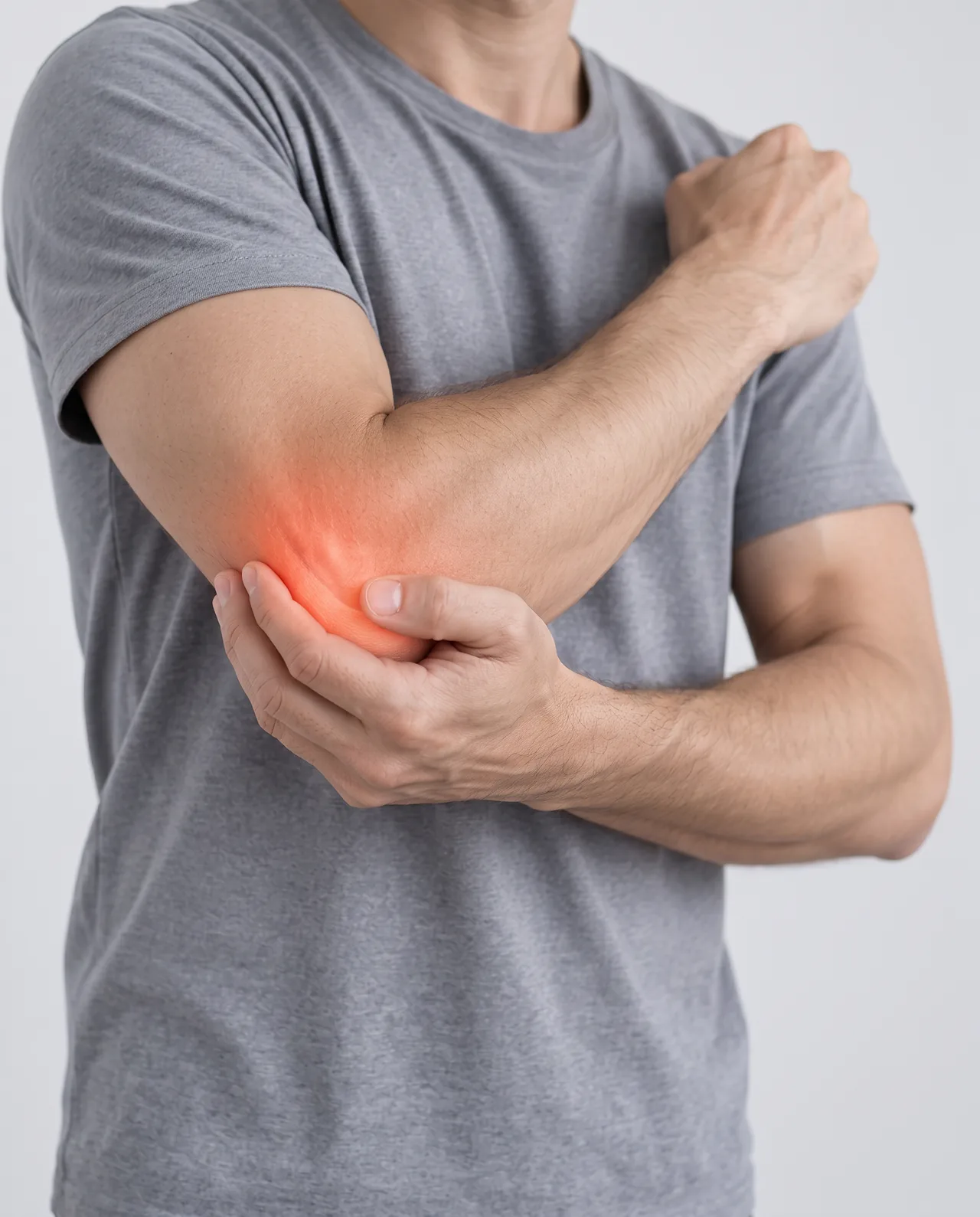
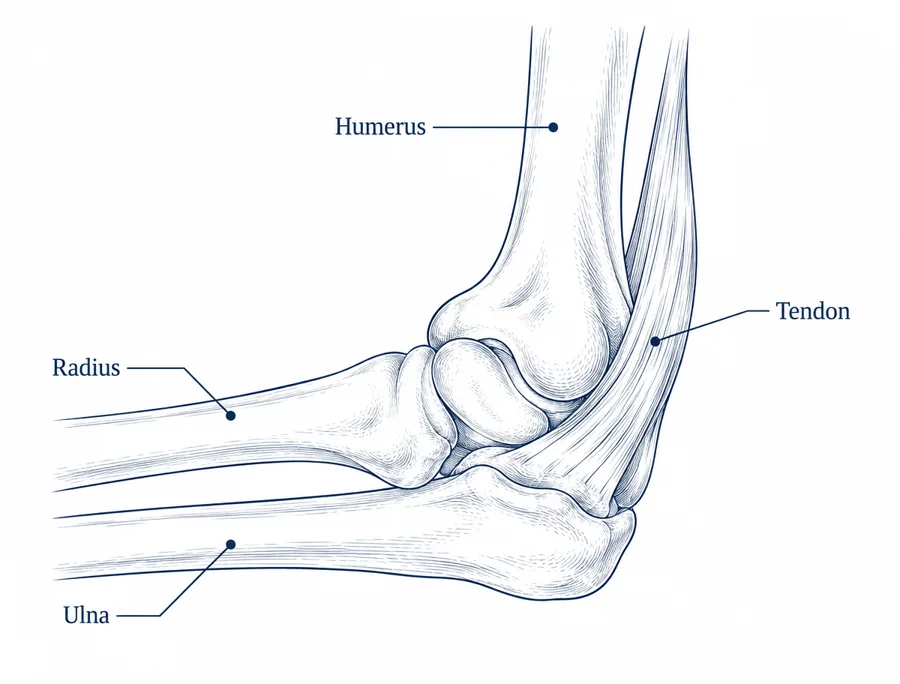
Repeated gripping, lifting, throwing, direct impact, arthritis, and nerve irritation can contribute. Symptoms on the outside, inside, front, or back of the elbow often suggest different structures, but examination helps distinguish them.
Explore · 02
The cause, health history and goals guide your options.
Guided movement, strength, and activity planning.
Medicines used within a wider care plan.
A substance placed into or around the affected area.
Repairing, stabilising, or replacing damaged tissue.
Prepared cells administered after clinical screening.
Explore · 03
Elbow discomfort may involve the joint surface or the tendons that attach the forearm muscles to bone. Tennis elbow and golfer’s elbow usually relate to tendon loading, while arthritis involves the joint. Persistent tendon pain is not always explained by inflammation alone.
The proposed action of mesenchymal stromal cells is mainly through signals released into their surroundings. In a tendon-focused discussion, the interest is in how these signals interact with tendon cells and the local tissue environment. A joint-focused discussion instead considers inflammatory activity within the joint. Neither mechanism means that a tendon or cartilage defect will be repaired.
Cells do not reattach a completely torn tendon, remove a loose piece of bone or release a trapped nerve. Gradual strengthening, changes to repetitive activity and other treatment options remain important. A biological procedure is not a substitute for identifying the cause of pain.

Explore · 04
Trust · 05

Share symptoms and questions.
Review history, medicines and scans.
Discuss options, timing and pricing.
Receive care and activity guidance.

Recovery and return to activity depend on the procedure and your health. Confirm activity and flight timing with your medical team.
Decide · 06