Physiotherapy and exercise
Guided movement, strength, and activity planning.
Understand · 01
Cartilage change, meniscus injury, ligament strain, tendon overload, kneecap mechanics, previous trauma, muscle capacity, and inflammatory conditions can contribute. More than one factor may be present at the same time.
Explore · 02
The cause, health history and goals guide your options.
Guided movement, strength, and activity planning.
Medicines used within a wider care plan.
A substance placed into or around the affected area.
Repairing, stabilising, or replacing damaged tissue.
Prepared cells administered after clinical screening.
Explore · 03
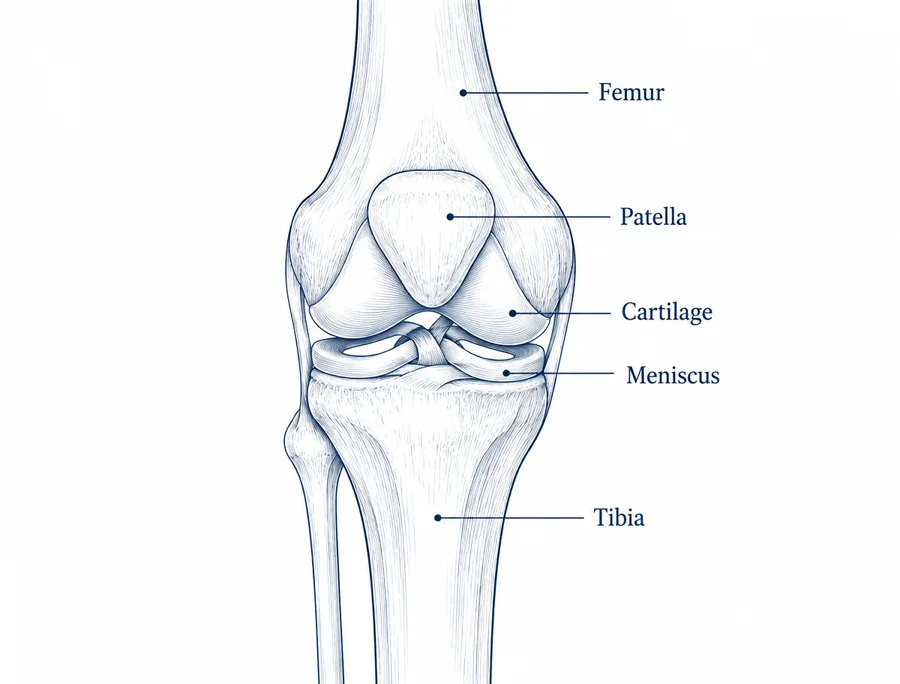
The knee contains cartilage, a joint lining called the synovium, menisci and stabilising ligaments. With osteoarthritis, changes can affect several of these tissues, not just cartilage. Swelling, stiffness, muscle weakness and altered loading may all contribute to symptoms.
Mesenchymal stromal cells can release signaling molecules that interact with surrounding cells and immune activity. In a knee joint discussion, the proposed focus is how these signals influence the joint environment and inflammatory pathways. Cells are not simply placed into the knee to turn into a new cartilage layer, and a biological mechanism does not guarantee a clinical benefit.
Stem cell therapy cannot be promised to regrow cartilage, reconnect a torn ligament or repair a meniscus tear. It does not mechanically correct knee alignment or replace a severely damaged joint. Strengthening, weight and activity management where appropriate, and other medical or surgical options may still be needed.

Explore · 04
Trust · 05

Share symptoms and questions.
Review history, medicines and scans.
Discuss options, timing and pricing.
Receive care and activity guidance.

Recovery and return to activity depend on the procedure and your health. Confirm activity and flight timing with your medical team.
Decide · 06