Physiotherapy and exercise
Guided movement, strength, and activity planning.
Understand · 01
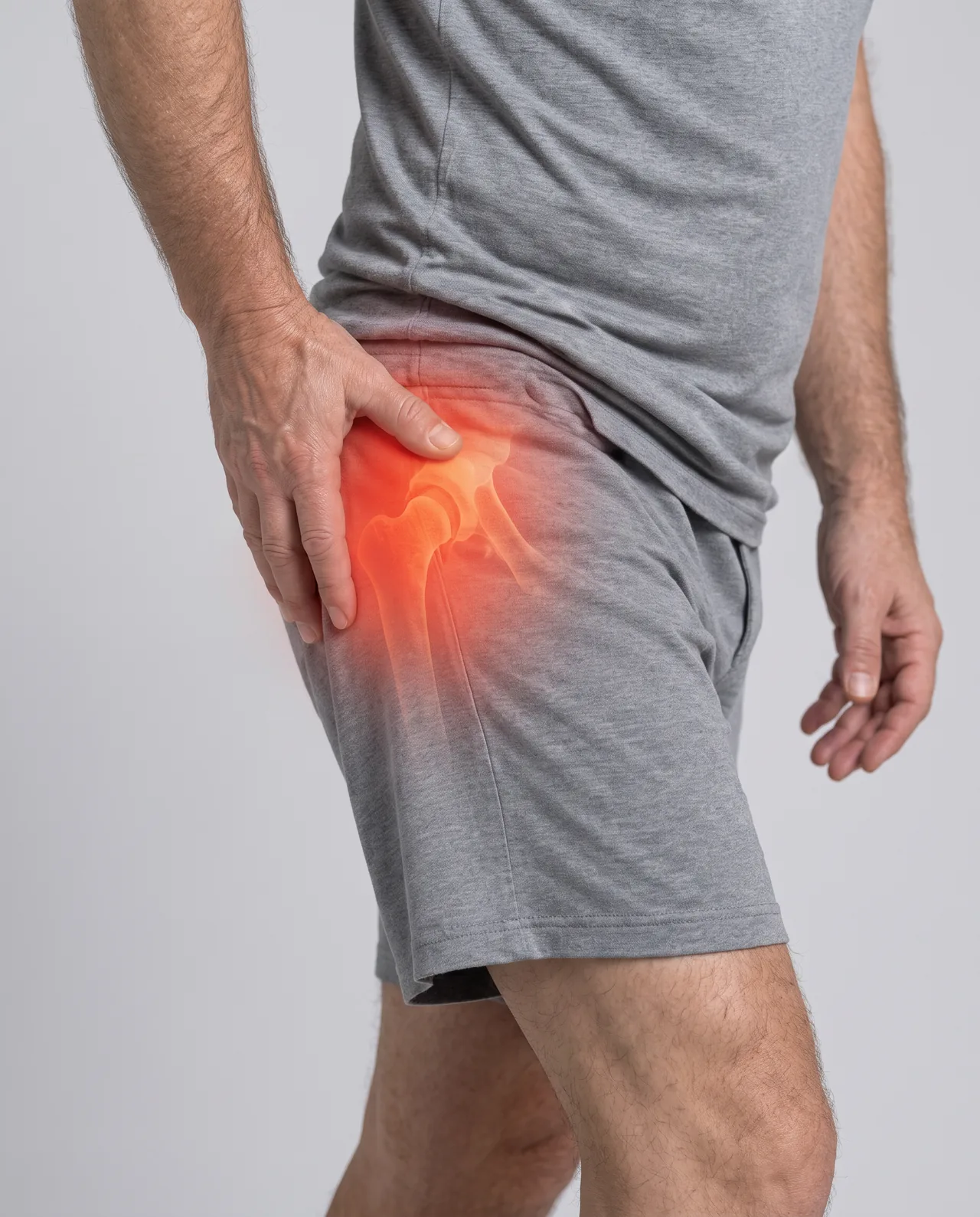
Joint cartilage change, tendon overload, injury, hip shape, reduced strength, spinal referral, and inflammatory conditions can contribute. Pain in the groin, outer hip, buttock, or thigh may point to different sources.
Explore · 02
The cause, health history and goals guide your options.
Guided movement, strength, and activity planning.
Medicines used within a wider care plan.
A substance placed into or around the affected area.
Repairing, stabilising, or replacing damaged tissue.
Prepared cells administered after clinical screening.
Explore · 03
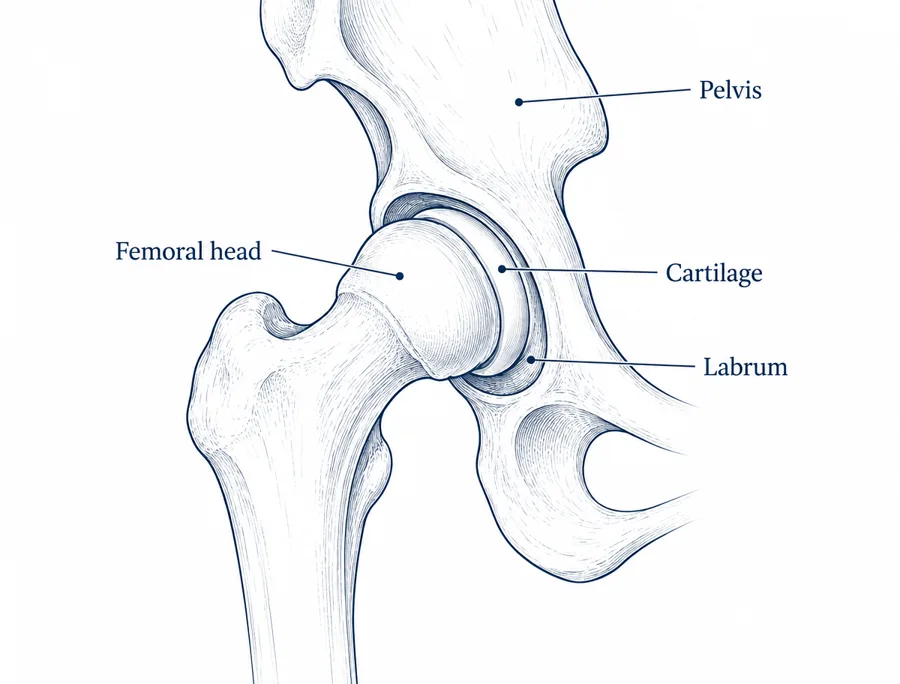
The hip is a deep ball-and-socket joint lined with cartilage. Pain may come from the joint itself, nearby tendons, the outer hip tissues or the lower back. Groin pain and outer hip pain can therefore need very different care plans.
For a selected hip joint condition, the proposed action of mesenchymal stromal cells involves signals that interact with joint cells and inflammatory pathways. The focus is the biological environment around affected tissues, rather than replacing the cartilage surface. This explanation describes a possible mechanism, not a promise of better movement or pain relief.
Stem cell therapy does not reshape an impinging hip, repair a labral tear mechanically or reverse collapse of the femoral head. It is not a replacement for hip replacement when that is the appropriate option. Significant bone damage and structural changes need their own assessment.

Explore · 04
Trust · 05

Share symptoms and questions.
Review history, medicines and scans.
Discuss options, timing and pricing.
Receive care and activity guidance.

Recovery and return to activity depend on the procedure and your health. Confirm activity and flight timing with your medical team.
Decide · 06