Physiotherapy and exercise
Guided movement, strength, and activity planning.
Understand · 01
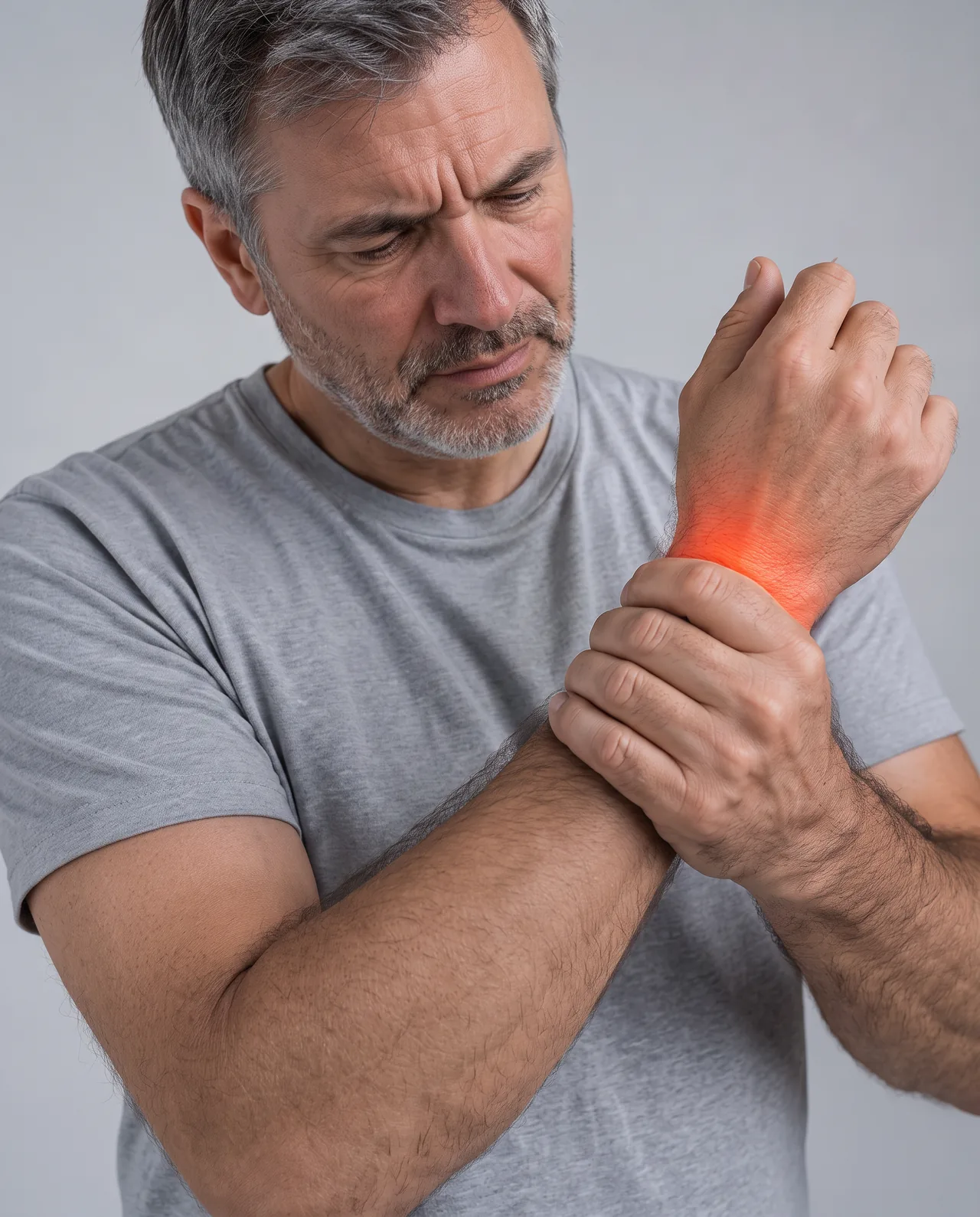
Repeated hand use, falls, twisting injuries, arthritis, tendon irritation, nerve compression, and inflammatory disease can contribute. The exact location, affected fingers, swelling, numbness, and movement pattern help guide assessment.
Explore · 02
The cause, health history and goals guide your options.
Guided movement, strength, and activity planning.
Medicines used within a wider care plan.
A substance placed into or around the affected area.
Repairing, stabilising, or replacing damaged tissue.
Prepared cells administered after clinical screening.
Explore · 03
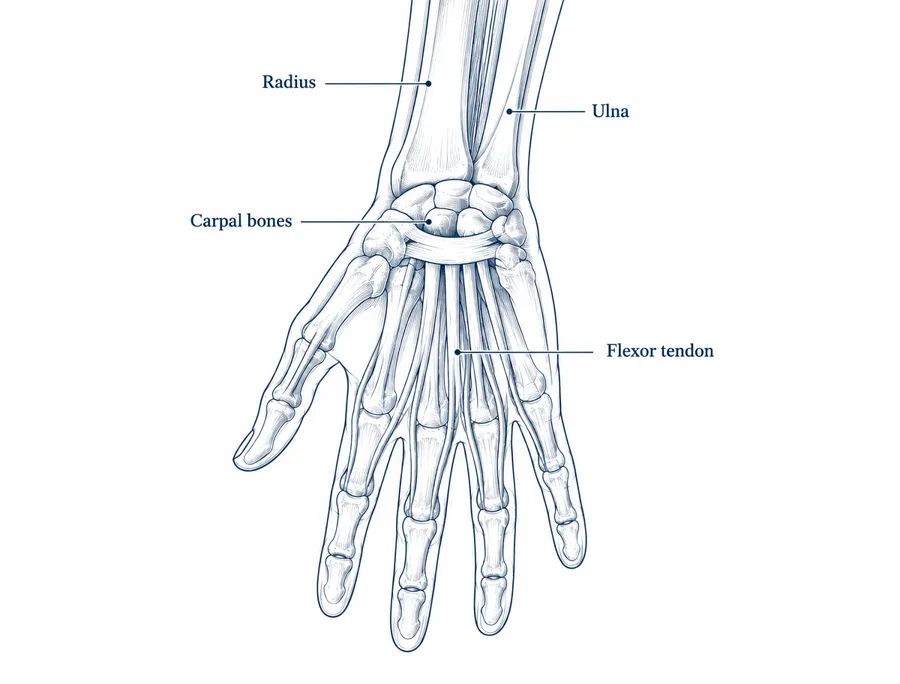
The wrist and hand contain small joints, tendons, ligaments and nerves in a compact space. Thumb-base arthritis, tendon irritation and carpal tunnel syndrome can all affect grip, but they do not have the same cause or treatment pathway.
For selected joint or tendon discussions, the proposed role of mesenchymal stromal cells centres on signals released into the surrounding tissue environment. These signals can interact with local cells and inflammatory activity. This should not be described as growing a new small joint or rebuilding a damaged tendon, and no change in grip or pain can be guaranteed.
Cells do not release the compressed nerve in carpal tunnel syndrome, straighten a deformed joint or reconnect a torn ligament. Nerve compression, fractures and significant structural injury require their own care pathways. Hand therapy, splinting, activity adjustments or surgery may be more appropriate depending on the diagnosis.

Explore · 04
Trust · 05

Share symptoms and questions.
Review history, medicines and scans.
Discuss options, timing and pricing.
Receive care and activity guidance.

Recovery and return to activity depend on the procedure and your health. Confirm activity and flight timing with your medical team.
Decide · 06