Physiotherapy and exercise
Guided movement, strength, and activity planning.
Understand · 01
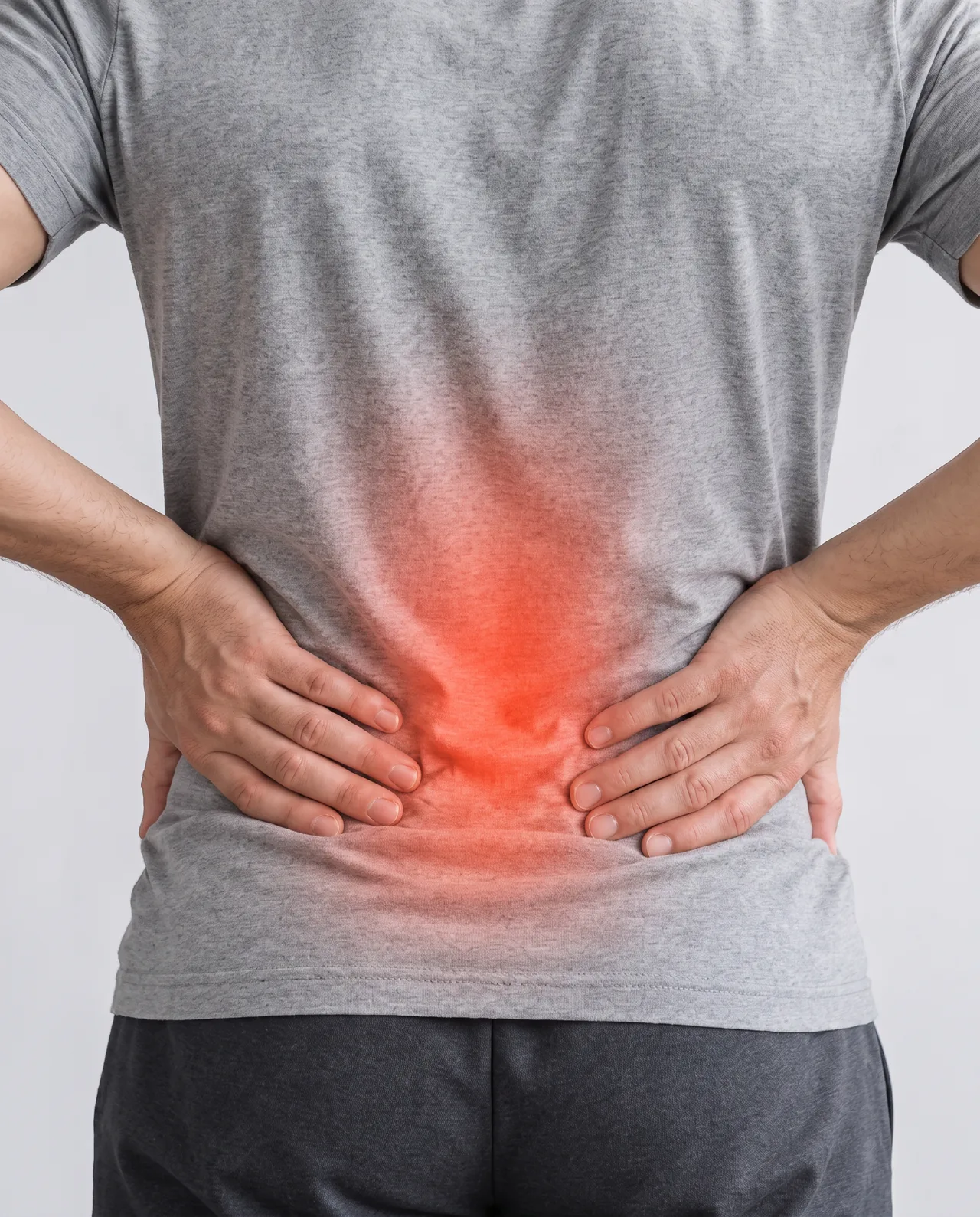
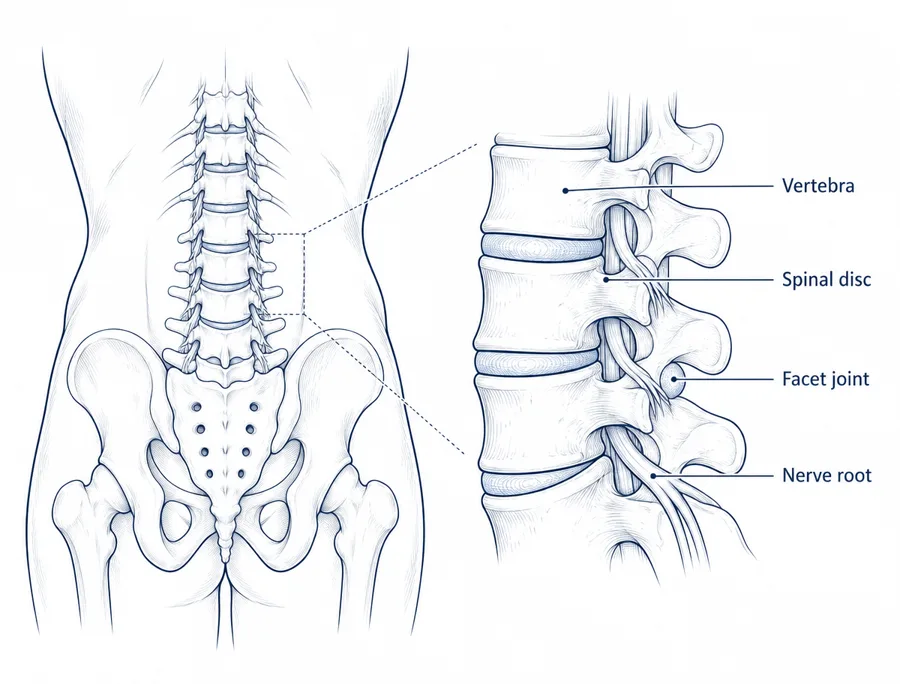
Back discomfort may follow lifting, prolonged positions, reduced activity, repeated loading, injury, or age related tissue change. Disc, facet joint, bone, nerve, and muscular factors can overlap. A careful history is important because some symptoms need prompt investigation.
Explore · 02
The cause, health history and goals guide your options.
Guided movement, strength, and activity planning.
Medicines used within a wider care plan.
A substance placed into or around the affected area.
Repairing, stabilising, or replacing damaged tissue.
Prepared cells administered after clinical screening.
Explore · 03
Back pain can come from muscles, facet joints, spinal discs or nerves, and several factors may overlap. A disc has a softer centre and a stronger outer ring that help distribute load between spinal bones. Changes on a scan do not, by themselves, prove that a disc is causing pain.
For selected disc-related discussions, the proposed role of mesenchymal stromal cells concerns biological signals within the disc environment. These signals may interact with local cells and inflammatory pathways. This is different from inserting a replacement disc or physically changing the shape of the spine, and it does not establish that symptoms will improve.
Stem cell therapy does not mechanically remove a disc bulge, widen a narrowed spinal canal or free a compressed nerve. It is not a general treatment for all back pain. A disc-directed procedure requires its own specialist assessment; a treatment offered for a limb joint cannot simply be assumed suitable for the spine.

Explore · 04
Trust · 05

Share symptoms and questions.
Review history, medicines and scans.
Discuss options, timing and pricing.
Receive care and activity guidance.

Recovery and return to activity depend on the procedure and your health. Confirm activity and flight timing with your medical team.
Decide · 06