Physiotherapy and exercise
Guided movement, strength, and activity planning.
Understand · 01
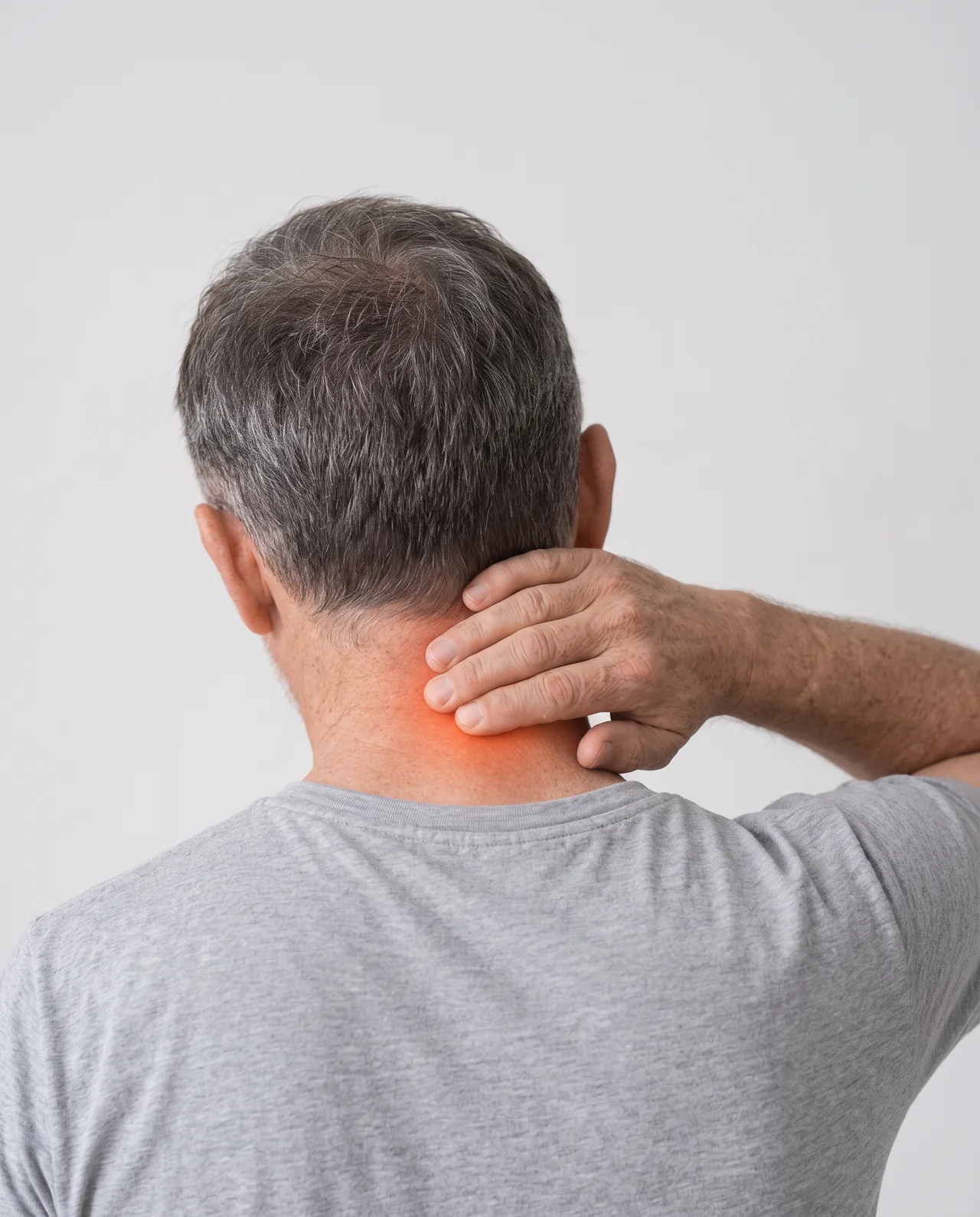
Sustained positions, rapid changes in activity, injury, joint or disc change, nerve irritation, headaches, and muscular sensitivity may contribute. Arm symptoms, weakness, balance change, or severe headache can alter the urgency and type of assessment.
Explore · 02
The cause, health history and goals guide your options.
Guided movement, strength, and activity planning.
Medicines used within a wider care plan.
A substance placed into or around the affected area.
Repairing, stabilising, or replacing damaged tissue.
Prepared cells administered after clinical screening.
Explore · 03
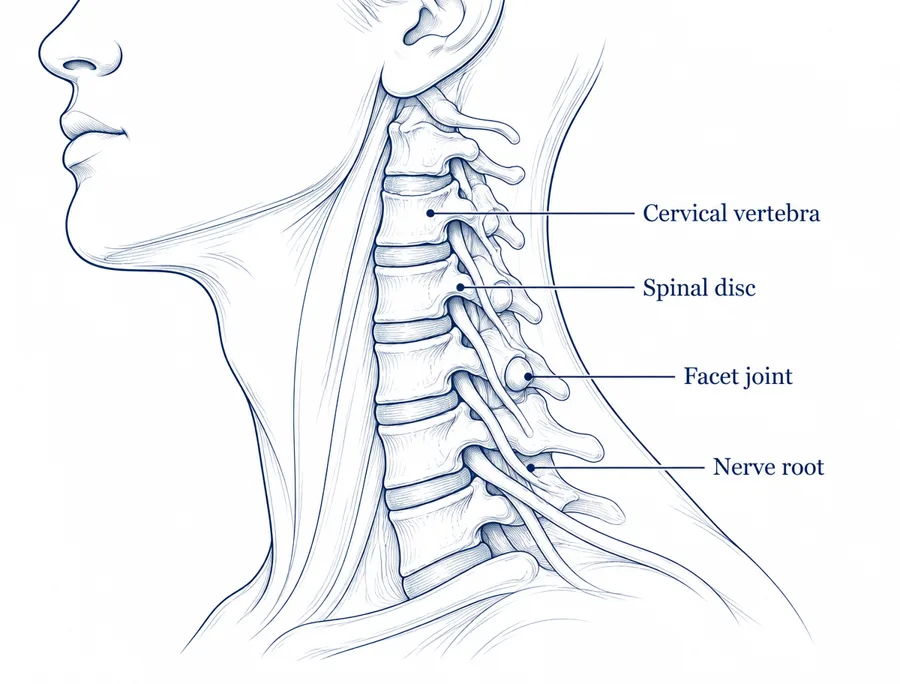
Neck discomfort may involve muscles, small spinal joints, discs or nerves. The cervical spine also surrounds the spinal cord, so a neck procedure needs a different level of anatomical and neurological assessment from a procedure involving a limb joint.
In a selected disc-related discussion, the proposed role of mesenchymal stromal cells concerns signals that interact with local cells and inflammatory pathways. This does not mean that the cells rebuild a cervical disc or remove pressure on the spinal cord. A proposed biological action alone is not enough to establish suitability or predict benefit.
Stem cell therapy is not a general answer for neck stiffness, trapped nerves or spinal cord compression. It does not remove bone spurs, stabilise an unstable spine or widen a narrowed canal. Any neck-directed procedure requires specialist review, including a clear explanation of why the approach is appropriate and what risks it carries.

Explore · 04
Trust · 05

Share symptoms and questions.
Review history, medicines and scans.
Discuss options, timing and pricing.
Receive care and activity guidance.

Recovery and return to activity depend on the procedure and your health. Confirm activity and flight timing with your medical team.
Decide · 06