
Treatment guide
Degenerative Meniscus Tear Treatment: Rehab or Another Procedure?
How to interpret a wear-related meniscus finding, evaluate a rehabilitation plan and decide what to ask before paying for another procedure.
Educational content, not individual medical advice.
Editorial article. Medical team review pending.
Quick answer
Key points at a glance
- Degenerative meniscus tear treatment should consider symptoms, examination and any knee osteoarthritis, not just the MRI label.
- Non-surgical care often comes first, with an individual rehabilitation plan and review.
- Improving symptoms does not prove the tear has healed.
- A truly locked knee or significant new injury needs prompt assessment; stem cell therapy is not an established way to repair a meniscus tear.
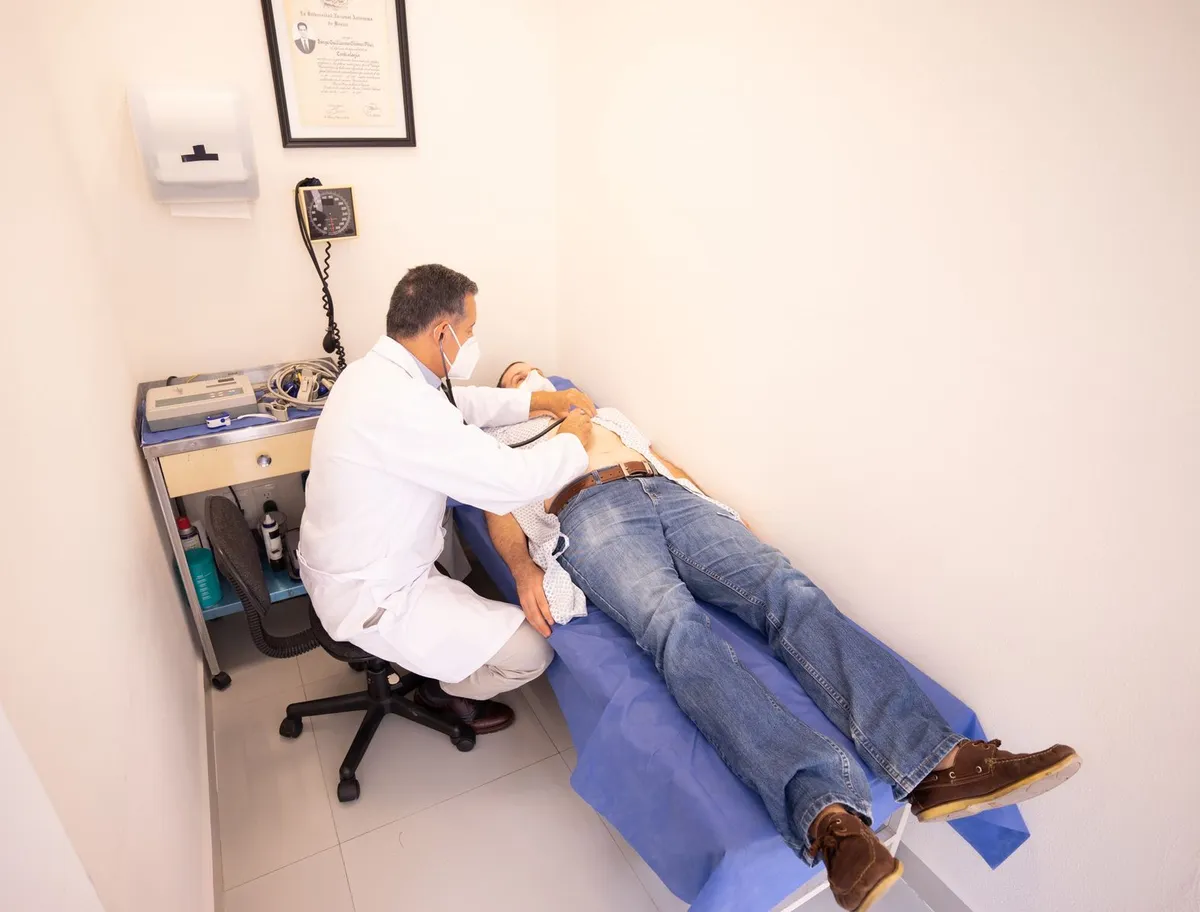
Prepare a useful progress record before another procedure
A short progress record can help the next team understand what has changed.
- Note your usual walking tolerance, whether swelling follows activity, any difficulty fully straightening the knee and which exercises you were actually able to complete.
- Record setbacks as well as good days.
- This is more informative than describing all previous care as unsuccessful without details.
Ask your physiotherapist or treating team for the programme and any assessment notes if you are seeking another opinion.
- Include the duration of each treatment and whether you stopped because of pain, cost, scheduling or lack of progress.
- These are different reasons and may lead to different next steps.
- Do not stop prescribed care simply to prepare for an overseas consultation.
When comparing another procedure, request an explanation of the intended goal and how it relates to the tear.
- Ask what improvement would justify the cost, what uncertainty remains and what the next step would be if symptoms continue.
- No imaging label can supply those answers by itself, and no injection should be sold as guaranteed meniscus repair.
For an international visit, separate the initial records discussion from an in-person treatment decision.
- Confirm travel needs only after the team explains why an examination may be useful.
- Keep funds and scheduling flexibility for additional assessment, and agree how your usual medical team would receive the consultation summary afterward.
A tear on MRI is not the whole diagnosis
Degenerative tears develop with changes in the tissue over time, rather than always following one clear twisting injury.
- A person can have both meniscus changes and osteoarthritis.
- The medical team needs to consider whether the tear explains the symptoms or is one part of a wider knee problem.
Describe pain location, swelling, catching and what you mean by locking. Occasional clicking is not the same as a knee that becomes stuck and cannot straighten. Keep the MRI images as well as the report; another team may need to review the actual images.
What should a rehabilitation plan cover?
- Movement: assess bending, straightening and walking.
- Strength: select exercises for the knee and surrounding muscles.
- Daily load: adapt activities that repeatedly aggravate symptoms.
- Review: agree when progress will be checked and what changes need earlier attention.
An individual programme is more useful than a fixed exercise list for every tear.
- Keep notes about swelling, walking tolerance and tasks that matter to you.
- Do not push through increasing swelling or a new loss of movement simply because a generic programme tells you to continue.
For the broader healing question, read can a meniscus tear heal without surgery?. That guide explains why blood supply, tear shape and knee stability matter, and why symptom improvement is different from tissue healing.
When is another assessment worth arranging?
If a properly followed plan has not addressed the main limitation, ask whether the diagnosis, exercise load or another knee condition needs reassessment.
- Bring details of what you tried and for how long.
- An unexplained lack of progress is a reason for a review, not automatic proof that an injection or surgery is needed.
AAOS notes that many meniscus tears do not require immediate surgery.
- For knee osteoarthritis, NICE advises against arthroscopic lavage or debridement.
- These points do not rule out every meniscus operation; a repairable injury, displaced tear or true locking can require a separate specialist assessment.
Separate pain-management discussions from repair claims
Conventional injections may be discussed for another component of knee pain, such as an arthritis flare.
- Ask whether the proposal concerns pain management or the tear itself.
- Those are different goals, and a symptom-directed injection is not proof the meniscus has repaired.
Stem cell therapy is not established as a way to heal a meniscus tear. Before considering it, ask about uncertainty, infection and other risks, the specific product and appropriate alternatives.
- Compare any written quotation with our stem cell knee injection cost checklist.
- Do not interpret a laboratory certificate as evidence of meniscus healing.
Make a Bangkok consultation specific to your knee
Explore cartilage and meniscus conditions and knee care in Bangkok.
- For an enquiry, prepare a symptom timeline, previous physiotherapy or injections, medicines and available imaging.
- Ask the team how to share scans securely before sending detailed records.
An online conversation can identify information needed for an appointment, but it cannot guarantee suitability for any procedure.
- Confirm whether an in-person examination is worthwhile, what extra tests may be needed and how follow-up would continue at home.
- Keep your existing medical team involved.
Choose the next step without rushing
A locked knee, major swelling following injury or inability to bear weight needs prompt local care. For ongoing nonurgent symptoms, request a meniscus discussion before booking travel or paying for a procedure.
This article is general education, not a diagnosis or a guarantee that surgery can be avoided. Independent sources do not endorse our clinic, and medical-team review is pending.